This Thursday, May 26 at 7 pm, the University of Redlands Theatre department invites you to attend a free, open rehearsal of "The Hamlet Project" developed by Chris Beach and Doug Hammett at the Frederick Loewe Theatre.
Beach and Hammett's adaptation sets Shakespeare's tragedy in a dystopian world where people speak Shakespearean English while employing modern-day social networking and surveillance technologies.
This juxtaposition makes thematic sense given that the plot of Hamlet revolves around several crucial mysteries: has King Hamlet's ghost risen from the grave? How did the king really die? Why has Hamlet started to behave strangely? Shakespeare's characters seek eyewitness evidence to answer these questions, devising elaborate strategems to ensure that they can see without themselves being seen.
Surveillance has become a heightened concern in modern-day societies, with the introduction of digital technologies that expand the scope of what can be recorded, analyzed and inferred. Incorporating cameras, mobile devices and social networking into a production of Hamlet raises necessary questions about the value of privacy and the way in which societies throughout history have balanced security and liberty.
If you're interested in reading further, try searching the Armacost Library catalog for more information on electronic surveillance, privacy and digital technologies. Here are a few possibilities:
American Privacy: The 400 Year History of Our Most Contested Right
Frederick S. Lane
KF 1262.L36 2009
Attorney Frederick Lane reviews the role of privacy in American history, from the efforts to keep postal mail safe during Colonial times through the signing of the PATRIOT Act in October 2001.
Privacy in the Age of Big Data: Recognizing Threats, Defending Your Rights, and Protecting Your Family
Theresa M. Payton & Theodore Claypoole
KF 1262.P39 2014
Payton is a former White House Chief Information Officer and CEO of a fraud and risk consulting company. Claypoole is a technology attorney who heads the Privacy and Data Management team for a major law firm. They explain in plain English how popular consumer technologies can be used to gather data in unwanted ways, and what you can do about it.
Data and Goliath: The Hidden Battles to Collect Your Data and Control Your World
Bruce Schneier
HM846.S362 2015
Security analyst Schneier describes how corporations and governments have created a "surveillance society" at the cost of economic, civic and moral harms.
Unpopular Privacy: What Must We Hide?
Anita L. Allen
JC596.A44 2011
Is privacy always good? Should we have laws enforcing privacy, or should it be a matter of individual choice? Philosopher and laywer Anita Allen looks beyond the most popular and well-liked privacies, to ask whether unpopular - even coercive - privacies are also worthwhile, even if they require government regulation.
Sanjeet Mann
Arts & Electronic Resources Librarian
University of Redlands
Tuesday, May 24, 2016
"Seeing Unseen": Privacy, Surveillance and the Hamlet Project
Labels:
censorship
,
privacy
,
surveillance
,
theatre arts
Wednesday, May 11, 2016
The Lure of the Desert
“Men come and go, cities rise and fall, whole civilizations appear and disappear-the earth remains, slightly modified. The earth remains, and the heartbreaking beauty where there are no hearts to break. [...] I sometimes choose to think, no doubt perversely, that man is a dream, thought an illusion, and only rock is real. Rock and sun.”
~Edward Abbey (1990), Desert Solitaire, p. 194
In Southern California, we are surrounded by deserts. Specifically, the Colorado and Mohave Deserts, within which rests Mojave National Preserve, Joshua Tree National Park, the Salton Sea, and Anza-Borrego Desert State Park. These unique ecosystems, and long stretches of sky, have influenced and shaped the words of many writers.
For a broad view of literature of "The West", which would involve in some cases, deserts, A Literary History of the American West, located in the Reference Collection in Armacost Library is a useful volume to introduce oneself to the history and development of literature on this side of the continent. The book is sponsored by the Western Literature Association, and begins with the oral traditions of Native Americans and early travel narratives, followed by the bulk of the book, which covers authors in different areas of the West (including Southwest, Midwest, Rocky Mountains, etc.).
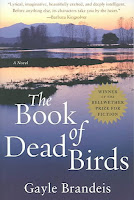
Edward Abbey (quoted above) is an essential author to read if you are fascinated with the desert landscape. His most well known work, Desert Solitaire: A Season in the Wilderness, documents his time spent as a park ranger at Arches National Monument, in which he reflects on his love of nature, and warns of the continuing desecration of our wild lands. This theme of desecration is continued in his novel, The Monkey Wrench Gang, which follows a group of ecological anarchists intent on demolishing tractors, trains, and bridges to protect the environment. Good News is one of his novels which tends to fly under the radar. It may be best described as a desert dystopia, which warns readers of the consuming march of civilization.
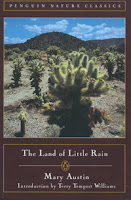
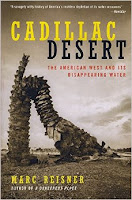
After you've explored Edward Abbey a bit, you may be ready to move on to the following books, which explore our local desert landscapes:
~Edward Abbey (1990), Desert Solitaire, p. 194
In Southern California, we are surrounded by deserts. Specifically, the Colorado and Mohave Deserts, within which rests Mojave National Preserve, Joshua Tree National Park, the Salton Sea, and Anza-Borrego Desert State Park. These unique ecosystems, and long stretches of sky, have influenced and shaped the words of many writers.
For a broad view of literature of "The West", which would involve in some cases, deserts, A Literary History of the American West, located in the Reference Collection in Armacost Library is a useful volume to introduce oneself to the history and development of literature on this side of the continent. The book is sponsored by the Western Literature Association, and begins with the oral traditions of Native Americans and early travel narratives, followed by the bulk of the book, which covers authors in different areas of the West (including Southwest, Midwest, Rocky Mountains, etc.).
Edward Abbey (quoted above) is an essential author to read if you are fascinated with the desert landscape. His most well known work, Desert Solitaire: A Season in the Wilderness, documents his time spent as a park ranger at Arches National Monument, in which he reflects on his love of nature, and warns of the continuing desecration of our wild lands. This theme of desecration is continued in his novel, The Monkey Wrench Gang, which follows a group of ecological anarchists intent on demolishing tractors, trains, and bridges to protect the environment. Good News is one of his novels which tends to fly under the radar. It may be best described as a desert dystopia, which warns readers of the consuming march of civilization.
After you've explored Edward Abbey a bit, you may be ready to move on to the following books, which explore our local desert landscapes:
Fiction
Nonfiction
Monday, April 25, 2016
Congratulations Bulldogs!
Congratulations
Bulldogs! Happy Graduation to those who
participated in festivities this past weekend! It’s that time of year when students
and faculty begin wrapping up shop, preparing for holidays, planning for the future! But wait, did you forget to turn
something in??
While you
are cleaning out your dorm room or office, you may stumble across that
thesis you were supposed to send somewhere.
Was it InSPIRe? Yes! There is still time for graduates to submit an honors
thesis to InSPIRe.
InSPIRe
@ Redlands is the University of Redlands's institutional repository. That's
just to say that it's a collection of intellectual and creative artifacts
created by the University of Redlands community. If you
are still not sure what InSPIRe is, check it out here: InSPIRe@redlands While it is better
to complete this task before you depart this beautiful campus, the library can
still assist you over the summer. The Armacost Library is always here to help
and we are open year-round!
The final
approved copy of a thesis can be sent to the InSPIRe mailbox at InSPIRe@redlands.edu and the signed
permission slip can be sent to the Library Director, Gabriela Sonntag via email
Gabriela_Sonntag@redlands.edu
Don’t forget there is always snail-mail: University of Redlands, Armacost
Library, 1249 E. Colton Avenue, Redlands, CA 92374 ATTN: InSPIRe
Share your
knowledge with future generations. Leave a legacy of scholarship, generate new
ideas and contribute to new knowledge. Inspire others! You may become famous!
Monday, April 18, 2016
The Santa Anas
It’s a little hot and windy lately, eh!? (No - not that last lecture.) The Santa Anas have kicked up. Here are some Armacost Library sources about
Southern California’s own devil winds.
Don’t let them get to you - come on in, find a comfy spot, and read in
the cool comfort of the Armacost Library!
Baron, R. A., Russell, G. W., and Arms, R. L. 1985. “Negative
Ions and Behavior: Impact on Mood, Memory, and Aggression among Type A and Type
B Persons.” Journal of Personality and
Social Psychology 48(3): 746-754.
Brown, James. 2002. “Fire.” New England Review 23 (1): 45–51.
Carle, David. 2006. “Santa Ana and Diablo Winds.” In Introduction to Air in California. Berkeley: University of
California Press.
Chandler, Raymond. 1995. “Red Wind.” In Stories and Early Novels. New York: Library of America.
Cody, M. L., and H. A. Mooney. 1978. “Convergence Versus
Nonconvergence in Mediterranean-Climate Ecosystems.” Annual Review of Ecology and Systematics 9: 265–321.
Davis, Mike. 1995. “The Case for Letting Malibu Burn.” Environmental History Review 19 (2):
1–36.
doi:10.2307/3984830.
Didion, Joan. 2008. “Los Angeles Notebook.” In Slouching towards Bethlehem. New York: Farrar,
Straus and Giroux.
Langford, A. O., R. B. Pierce, and P. J. Schultz. 2015. “Stratospheric
Intrusions, the Santa Ana Winds, and Wildland Fires in Southern California.” Geophysical Research Letters 42(14): 6091–6097.
![]() |
Friday, March 25, 2016
Celebrate the 2016 ALURA Winners!
The 2016 Armacost Library Undergraduate Research Award winners are ....
STEM category
Sarah Grimley whose research is titled The Need for a Neutral Speaking Period in the Trier Social Stress Test with faculty support from Dr. Lisa Olson, Biology.
Arts, Humanities, and Social Sciences category
Ellen Holt whose research is titled The American (Birth): A Valuable Pain with faculty support from Dr. Jennifer Nelson, Women, Gender, and Sexuality Studies.
Ellen impressed the Arts, Humanities, and Social Sciences Selection Committee with her reflection essay where she described the inspiration for her research, discussed her research methodology, and demonstrated an ability to adjust her search process when encountering challenges while gathering primary source data.
The STEM Selection Committee was struck by Sarah's tenacious search for information and use of multiple information tools. Her reflective essay and references demonstrated flexibility thinking in her searches, line of research, and integration of sources outside her discipline.
To view their research projects, check back shortly with the University's Institutional Scholarly Publication and Information Repository (InSPIRe). In the near future we'll upload their research projects to the ALURA series.
On behalf of both ALURA Selection Committees, we congratulate Sarah Grimley and Ellen Holt, two outstanding students at the University of Redlands! Please join us in the Library Conference Room (3rd floor) on Wednesday, April 6 from 4-5pm to celebrate their achievements.
Arts, Humanities, and Social Sciences Selection Committee
Nathaniel Cline, Economics
Lua Gregory, Library (Chair)
Tim Seiber, Johnston Center
Gabriela Sonntag, Library
STEM Selection Committee
Ben Aronson, Biology
Les Canterbury, Library
Eric Hill, Physics
Hillary Jenkins, Environmental Studies
Paige Mann, Library (Chair)
Tuesday, March 22, 2016
Tolkien Reading Day
According to The Tolkien Society, Friday, March 25, is Tolkien Reading Day, an international celebration of J. R. R. Tolkien's literary works.
Participants (or Tolkien enthusiasts) are encouraged to read their favorite passages. Here are a few books from the Armacost Library to get you started:

And feel free to search our Library for more books by J. R. R. Tolkien.
After you've read and reflected on your chosen words, I invite you to listen to Tolkien read to his friend, George Sayer. In August of 1952, while Tolkien visited George Sayer in Worcestershire, they recorded the following reading from The Hobbit, featuring Tolkien's voice acting for Gollum:
Enjoy!
Participants (or Tolkien enthusiasts) are encouraged to read their favorite passages. Here are a few books from the Armacost Library to get you started:
And feel free to search our Library for more books by J. R. R. Tolkien.
After you've read and reflected on your chosen words, I invite you to listen to Tolkien read to his friend, George Sayer. In August of 1952, while Tolkien visited George Sayer in Worcestershire, they recorded the following reading from The Hobbit, featuring Tolkien's voice acting for Gollum:
Enjoy!
Saturday, March 05, 2016
Deadline Extended: ALURA submissions due this Friday (3/18)
Applications for the 2016 Armacost Library Undergraduate Research Awards are due this Friday, March
Send us your research papers, posters, computer code, etc along with your
- Bibliography, works cited, or other list of sources if not included in your research project
- Research Reflection Essay
- Letter of support from your faculty sponsor
To see the research from previous winners, visit ALURA in the Institutional Scholarly Publication and Information Repository (InSPIRe).
Tuesday, February 23, 2016
Children's Literature and Charlotte S. Huck Children's Literature Festival
The annual Charlotte S. Huck Children's Literature Festival takes place this week, on Friday, February 26 and Saturday, February 27 and the lineup of authors and illustrators includes award winners such as Jerry Pinkney, Linda Sue Park, Kevin Henkes, Debra Frasier, and more.
Those interested in children's literature may want to visit the Juvenile Collection on the 3rd floor of the Armacost Library! In addition to award-winning children's literature, you can also discover literature which supports the School of Education's mission of social justice. Informational texts that align with current curriculum standards are also acquired to support teachers in the credential program.
Here are some new highlights in the Juvenile Collection:
Happy reading!
Monday, February 15, 2016
Researchers Wanted: Apply to ALURA
Polish up your capstone project, research poster, documentary, seminar paper, or other work and submit it to the Armacost Library Undergraduate Research Award (ALURA).
In 2016, for the first time, we'll have two categories: for the STEM disciplines and for the Arts, Humanities, and Social Science disciplines.
Undergraduate research is much more complex these days so the Armacost Library created this award to recognize scholars who demonstrate thoughtfulness, creativity, and critical thinking in their approach to research. We'll look for this in your Research Reflection Essay using our evaluation rubric. Learn more about the submission process at http://library.redlands.edu/alura.
The award for each category is $500 and submissions are due Friday, March 11, 2016.
Saturday, February 13, 2016
How a maverick educator found his home at Redlands
Barney Childs leads a seminar
Ninety years ago today, composer and educator Barney Childs was born in Spokane, Washington.
Childs is remembered for his multifaceted contributions to twentieth-century American music. His 160-plus compositions span a fifty-year period, from his early choral works written at Oxford to his final ensemble works premiered at the University of Redlands. Childs pursued formal education in literature and was largely self-taught as a composer. He drew on a wide range of musical and literary inspiration, but indeterminacy, improvisation and extended instrumental techniques recur throughout his mature work. Many of his pieces require the performer to take an active role in realizing the concept behind the score.
Childs founded a record label, Advance Recordings, to make contemporary music known to a wider audience. Advance LPs helped works by William Bolcom, George Crumb, Robert Ashley and Harold Budd (among others) to see the light of day. Childs' research on contemporary composers is documented in numerous interviews, articles and his book Contemporary Composers on Contemporary Music, co-edited with Elliot Schwartz.
Childs' teaching had perhaps the greatest impact on the Redlands community, as it led him to join Johnston College at the University of Redlands in 1971, just two years after Johnston's founding. Created during a time of deep social and intellectual turmoil, Johnston's founders saw problems with all of the dominant approaches to higher education. Johnston's response encompassed individualized education, nontraditional structures and innovative teaching and learning.
Childs was already familiar with experimental education from his years as a student, faculty member and dean of Deep Springs College, a tiny men's college nestled high in the mountains of eastern California. Founded in 1917 by Lucien L. Nunn, a former miner devoted to the idea of problem-based education, Deep Springs was an all-men's college comprising 25 students, 5 staff, and a working ranch with 5,000 head of cattle when Childs took classes there in the 1940s. New students were hand picked and there was no entrance fee. Students spent half their day studying and the other half working on the farm, doing everything from irrigating crops to fixing phone lines and changing work assignments three times a year.
Johnston faced significant challenges in its early days as its students, faculty and administration sought to realize their ideals and worked out the college's relationship to the greater University of Redlands. Nevertheless, the fledgling college was able to hire several new faculty each year, and an opening for a joint humanities/music position brought Barney Childs to Redlands in 1971, where he joined his friend and frequent collaborator Phil Rehfeldt, who was already on the music faculty. Childs quickly settled into life in Johnston, offering courses in "The Nature of Evil in Literature" as well as independent studies and semester courses in poetry, Shakespeare, electronic music and coordination of the student New Music Ensemble.
Childs summarized what was learning about experimental education in his 1973 article "Teaching Music Theory: The Experimental College". He observed that many students came to experimental colleges to escape overly structured educational experiences, but
that a lack of constraint - actually, the very freedom he had been seeking - can be disorienting. This sometimes results in a tendency to seek attachment to something stable, within or without: religion, political cause, mysticism, sometimes an academic discipline. He has thus moved from a closed system to an open one in which the need to find internal actualization is vital. It is to this process that the best principles of experimental education are dedicated.Meanwhile, Childs likened the faculty experience at the experimental college to "teaching in a one-room schoolhouse: be prepared to teach everything to everybody on demand." He explained,
The very immediacy of student-faculty contact in a small school puts the teacher right out in the open; he is a member of a dynamic community first as a human being, not simply someone seen behind a desk ... 'busy' at an experimental college means interacting, regardless of the level of conversation, with someone else. The result is that inevitably one's teaching will be merely a part of his total presence.Childs taught at Redlands from 1971 to 1994, throwing his "total presence" into his work with students and faculty colleagues. In his fourth and final Johnston commencement address, Childs commented on Johnston's unique "state of mind" which persisted even as a Center integrated within the University of Redlands. He advised graduates to "Stay aware. Stay loose. Stay prepared for surprises..." and closed with his oft-quoted Childs' Law: "If you give your very best shot, you may - just may - be good enough."
Childs' legacy is preserved at Armacost Library in the Barney Childs Collection containing his published scores, writings, photos and manuscript compositions. A growing collection of items are also available online in the campus repository, InSPIRE.
Sanjeet Mann
Arts & Electronic Resources Librarian, Armacost Library
Sources
Childs, Barney. "The Burning of the Leaves: Deep Springs as Ritual." Barney Childs Collection, Armacost Library Special Collections. Jan. 22 1967. Address.
---. "Childs - JC Commencement Address, 1964"[sic]. Barney Childs Collection, Armacost Library Special Collections. May 1994. Address.
---. "The Obligatory Inspirational Commencement Address." Journal of Humanistic Psychology 21.2 (1981): 143-146. Barney Childs Collection, Armacost Library Special Collections. Print.
---. "Teaching Music Theory: The Experimental College." Journal of Music Theory 18.1 (Spring 1974): 101-109. Web.
"Deep Springs: The School in the Desert." Times Educational Supplement 20 Nov. 1948: 653. Barney Childs Collection, Armacost Library Special Collections. Print.
Fox, Jim. "Barney Childs in Memoriam." 21st Century Music. March 2000: 9-10. Web.
Rehfeldt, Phil. Letter to Barney Childs. Barney Childs Collection, Armacost Library Special Collections. 3 Nov. 1970. TS.
---. Letter to Barney Childs. Barney Childs Collection, Armacost Library Special Collections. 7 Dec. 1970. TS.
University of Redlands. Annual Catalog 1972-1973. Print.
Sunday, January 24, 2016
Diane Nash - Civil Rights
Diane
Nash speaks at the University of Redlands on Wednesday, January 27th,
in the Memorial Chapel at 7:00pm. Ms.
Nash is a civil rights leader, and has been for more than 50 years.
Explore Civil Rights @ the Armacost Library!
Subscribe to:
Posts
(
Atom
)